Low-voltage electronics · Clear signals
See the signal. Check the detail.
Make sense of bandwidth, sampling and two-channel measurements before choosing a handheld oscilloscope. Explore the FNIRSI 2C53P and practical low-voltage measurement guides.
Choose with confidence
Start with what matters.
Check sampling in the actual channel mode
Match the probes and input limits
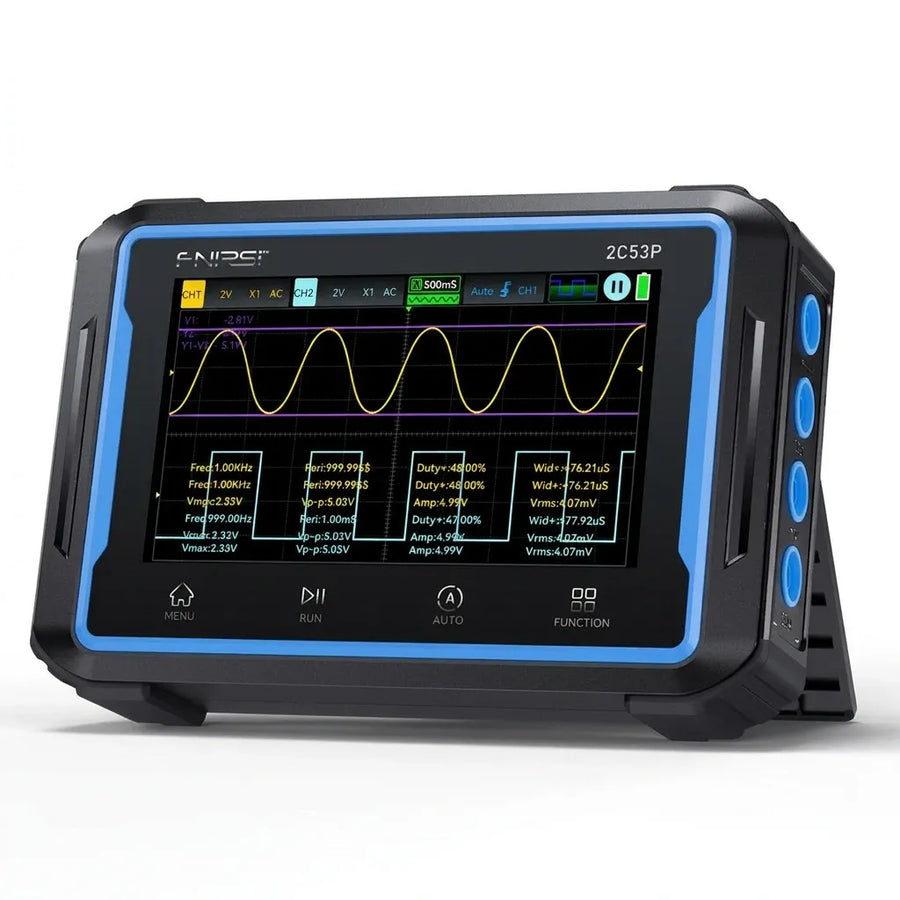
FNIRSI 2C53P Handheld Oscilloscope
Check bandwidth, sample rate and record length in the mode you will actually use. Battery power does not establish isolated channels. Confirm the exact probes and accessories with Payverza; this site does not recommend the instrument for mains or high-voltage diagnosis.
Check the current productDigitalOsc guides
A useful place to begin.
50 MHz Handheld Oscilloscopes: Bandwidth, Sampling and Limits
Understand how bandwidth and sample rate affect a handheld oscilloscope measurement. Check the actual channel mode, probes and input limits before choosing an instrument.
Read the guide →Dual-Channel Oscilloscopes: Compare Two Signals Properly
Use two oscilloscope inputs to compare related signals. Check timing, sampling and probe connections, and confirm the instrument limitations before connecting either channel.
Read the guide →Portable Automotive Oscilloscopes: Check the Measurement First
Decide whether a vehicle measurement needs an oscilloscope, OBD reader or multimeter. Check signal levels, grounding and the exact instrument limits before connecting it.
Read the guide →